Takeaways from ISTE 2026: Insights from the LEGO® Education Booth
Every year, ISTELive brings together tens of thousands of educators, administrators, and edtech leaders from around the world for the largest education technology conference in the U.S. It's where the future of teaching and learning gets shaped, through packed session rooms, keynote conversations, and hands-on experiences on the expo floor.
This year, AI dominated the conversation. But the most powerful moments weren't about the technology itself. They were about the people using it: teachers, administrators, curriculum leaders, and instructional coaches trying to make sense of a fast-moving landscape.
At the LEGO® Education booth, we saw those same conversations play out in real time. We invited attendees to explore our lessons, join hands-on workshops, and share their own experiences, and between the demos and the countless conversations, a clear picture emerged of what's on educators' minds heading into the next school year. When we compared what we heard at our booth with what was being said on the ISTELive session stages, the themes were consistent.
Here are some of our biggest takeaways from ISTE 2026, and what they mean for the future of teaching and learning.
Educators Want AI Literacy for Their Students, Not Just AI Tools
Ask ten educators about AI in schools, and you'll get ten different answers. Some are excited. Some are skeptical. Some are exhausted just thinking about it. But underneath the range of reactions, one question kept surfacing from classroom teachers and district leaders:
How do we help students genuinely understand AI, not just use it?
That question isn't going away. If anything, it's getting louder as AI tools grow more powerful, more accessible, and more embedded in daily life. And it's the question shaping how forward-thinking schools are approaching AI integration today.
This idea came through powerfully on the session stages, too. During the panel Trusting AI in Schools: Putting Students at the Center, Karim Meghji, President & CEO of CodeAI, noted that “one of the best ways to protect a student is to teach them about the thing they’re actually experiencing every day,” rather than simply handing them a tool to use without understanding what’s happening beneath the surface. When we help students understand how these systems learn, question what they produce, and direct and create with them, they build the digital fluency to protect themselves.
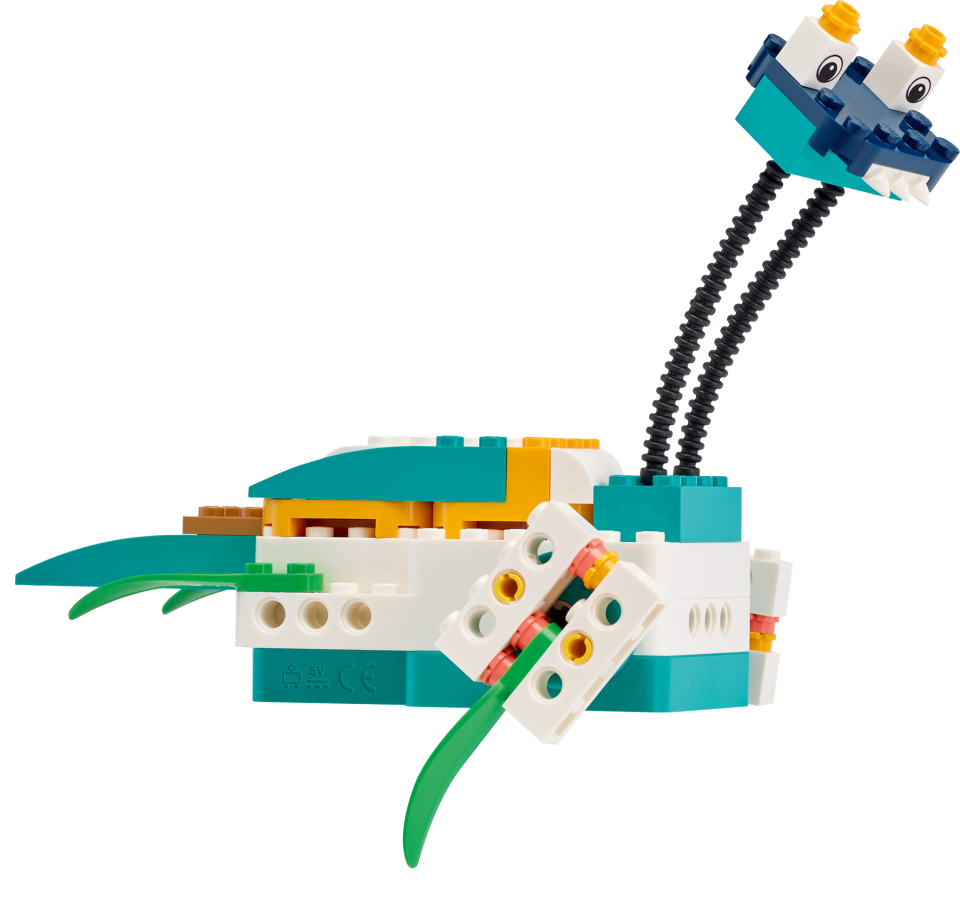
The same idea resonated in nearly every conversation at our booth. It's the philosophy behind LEGO® Education Computer Science & AI: helping students build AI literacy by making complex ideas tangible, visual, and age-appropriate. Educators experienced this firsthand through demoing lessons like Strike a Pose, a Grade 3–5 activity that shows how a physical, playful approach can demystify AI concepts that too often feel abstract or intimidating.
What this signals: AI literacy is emerging as one of the most important educational priorities of the moment, and it starts with making AI concepts visible, tangible, and understandable.
.jpg?locale=en-us&auto=webp&format=jpeg&width=1800&quality=90&fit=bounds)
Learn from three global leaders about how to preserve student agency in an automated world.
Hands-On Learning Is More Valued Than Ever
In a conference filled with screens, one of the most common reactions at our booth was the excitement that AI concepts could have a hands-on component. Teachers told us they're actively looking for ways to bring physical, playful learning back into their classrooms without giving up rigor.
Those hands-on experiences showed up in every corner of our booth. Our "lightbulb moment" chalkboard and swing photo op invited educators to share their own aha moments. Our progression-of-learning climbing wall turned the arc of student growth into something you could literally see, touch, and climb. Our data insights hopscotch path revealed key learning outcomes through a playful, interactive experience. And our Passion Playground offered space to explore additional lessons across grade levels at each educator's own pace.

Every element was designed to reflect what we believe great learning should feel like: hands-on, minds-on, and joyful.
What this signals: The "techlash" is more nuanced than it appears. Educators aren't rejecting technology, but the path forward is intentional integration, where tangible learning experiences are supported by technology when it adds real value.
Data Privacy and Safety Are Top of Mind
Conversations with educators often turned to questions like: Where does student data go? What can I tell parents? How do I know a tool is safe?
Our approach to data privacy and safety resonated deeply with attendees at our booth. LEGO Education Computer Science & AI is rooted in child wellbeing, safety, and privacy, designed to help students thrive, collaborate, and create through responsible use. That means no personal information is collected from students, no logins are required, and no data leaves the student device or is used to train AI models. Students still get to explore, experiment, and understand AI at a deep level. They just do it in an environment built with schools, families, and educators in mind from the start.
What this signals: Solutions that solve for safety and pedagogy simultaneously are what districts are actively seeking. Trust, once built, becomes the foundation for everything else.
Thank You for Stopping By
To every educator, administrator, and curriculum leader who spent time with us at ISTE 2026: thank you. Your questions sharpened our thinking, your enthusiasm reminded us why this work matters, and your "lightbulb moments" made our week!
Ready to Continue the Conversation?
Whether you visited us at ISTE or are just discovering LEGO Education, we'd love to help you bring hands-on AI literacy, and joyful, rigorous learning, to your school or district.